A Cold Christmas in Beijing (China Part 1)
Start Up Project - Manufacturing Operations in China
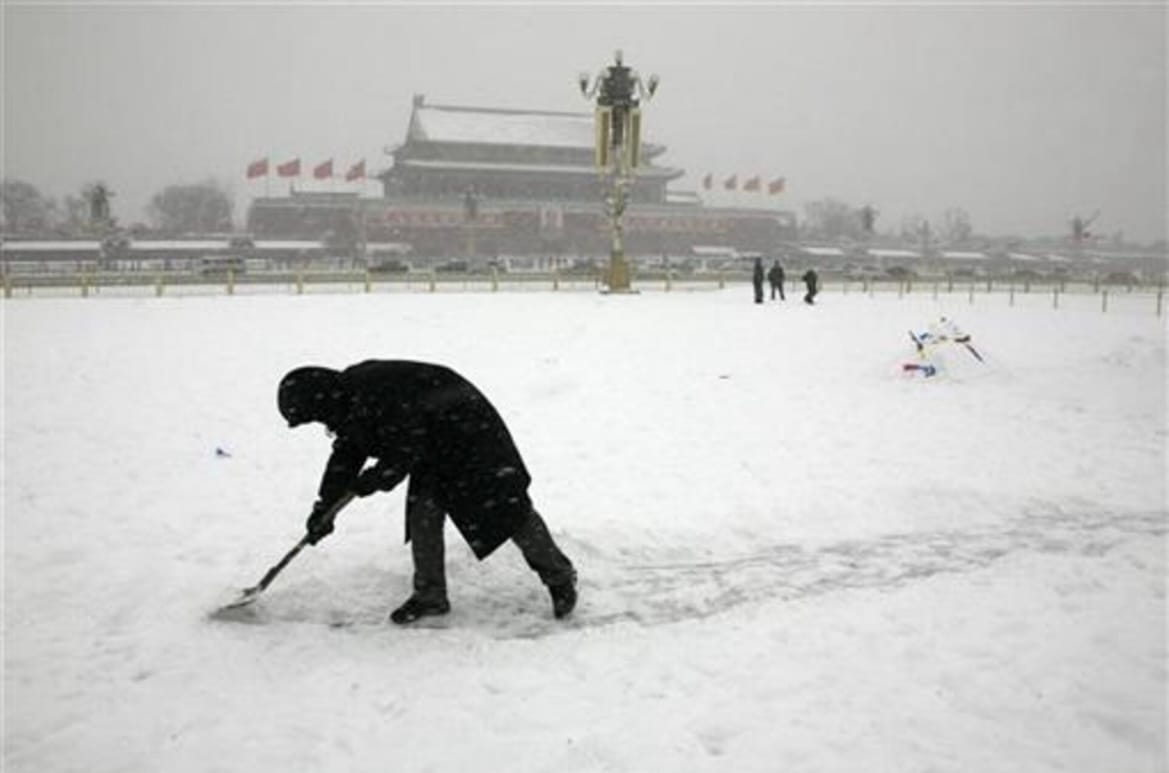
Christmas morning, 1992. Shibalidian, south-west Beijing.
Heavy snow fell in thick, silent flakes, numbing my face as we trudged through the site inspection. This was meant to be a routine progress check. Instead, it was the moment the project’s underlying reality became impossible to ignore.
I shoved frozen hands deeper into my heavy cashmere jacket and felt something colder settle in. The realisation that Mr Li had been promising, not delivering. Another milestone missed.
The factory shell should have been completed by now. Structurally, we were months behind. Half-built walls stood among piles of unused materials and construction debris scattered across the site. Nothing suggested urgency. Nothing suggested accountability. From a project management perspective, the signals were unequivocal: schedule slippage, weak supervision, and ineffective controls.
Li seemed entirely unfazed. He bellowed at the labourers, gestured expansively, and puffed on his unfiltered Camel cigarettes as if noise might substitute for progress. He refused to acknowledge our frustration. He didn’t need to. In his world, it was simply more background noise.
As we walked back to his office through the snow, it began to dawn on me that we were not managing the same project.
From my perspective, we had a defined scope, an agreed timeline, and a contractual obligation that had already been breached. From his perspective, the project was still unfolding. Delays were not failures; they were leverage. Progress would occur when conditions—political, relational, or financial—were right.
Li knew the right people. He had the right relationships. He had guanxi.
To the project guanxi could mean so much. Being allocated our own power supply so we could start up our factory. Clearance of our proprietary equipment locked up in Customs. Access to the right workers for our type of manufacturing. Guanxi was everything and Li knew it.
Back in his office, windows firmly shut against the cold, the air thick with cigarette smoke, it finally crystallised. The project plan we were tracking so diligently was not the mechanism driving delivery. Guanxi was. The real controls sat outside the schedule, beyond the contract, and well above my pay grade. Authority flowed through relationships, not charts. Influence mattered, not compliance.
The mistake was not that the factory was behind schedule. The mistake was believing that our definition of “on track” mattered more than his. That we were measuring the things that really mattered on the schedule.
That Christmas morning I finally understood that the greatest risk to the project was not construction capability, weather, power supply or even bureaucracy. It was the silent assumption that both sides were optimising for the same outcomes, using the same rules, under the same definition of success.
We weren’t.
The Deal
The deal itself had been closed almost a year earlier, in this same office. The setting should have been my first warning. Windows sealed shut against the Beijing winter, the air dense with cigarette smoke, conversation punctuated by long pauses rather than decisions. Li spoke confidently about timelines, approvals, and local support. On paper, it looked like alignment. In practice, it was choreography.
From our perspective, the transaction felt complete. We had signed agreements, committed capital, and secured what we believed were the necessary approvals. This should have marked the transition from concept to delivery, from negotiation to execution.
It hadn’t.
What we mistook for closure was, in reality, permission to begin building relationships. The contract did not trigger delivery; it merely opened the door to it.
This is where Guanxi sits at the centre of the project—not as a cultural nuance, but as the primary governance mechanism, the real determinant of progress. Guanxi is not about friendliness or goodwill. It is a system of obligation, reciprocity, and influence that determined whose priorities advanced, whose delays were tolerated, and whose problems got quietly solved.
Under this system:
- Formal approvals were necessary but insufficient.
- Timelines were aspirational, not binding.
- Accountability flowed through relationships, not through hierarchy.
Li’s confidence did not come from the contract we had signed. It came from his network—local officials, suppliers, inspectors, and party representatives—each with his own interests, expectations, and some degree of informal veto power. Progress depended on maintaining equilibrium across that network, not on meeting milestones agreed with a foreign partner.
For us, project governance relied on clarity: scope, schedule, escalation. On Li’s side, governance relied on balance: not moving too fast, not offending the wrong stakeholder, not exhausting political capital prematurely. Delays were not project failures; they were strategic pauses.
We believed we had secured control because we had secured agreement. In reality, we had secured access—nothing more. Control remained embedded in local relationships we neither owned nor fully understood.
Success should not have been measured by construction progress alone, but by the strength and reach of influence across the local ecosystem. The real question should not have been “Are we on schedule?” but “Whose support have we earned this month, and whose patience are we testing?”
The contract gave us confidence. Guanxi gave Mr Li control. And until that asymmetry was acknowledged, the project could only proceed on his terms.
Why Beijing Was Hard
Beijing was not hard because of the cold, the language, or the bureaucracy. Those were visible inconveniences. The real difficulty was invisible.
The project met delay after delay because we misunderstood where control actually sat.
Beijing in the early 1990s was governed by political balance, not delivery momentum. Authority was relational, not contractual. Progress depended on maintaining equilibrium across networks of influence, not on meeting milestones.
Western projects optimise for momentum. Beijing optimised for stability. Delay preserved political capital. Moving too fast created risk. What looked like inefficiency from the outside often functioned as risk management from the inside.
Nothing openly failed. There was no refusal, no escalation point, no visible breakdown. Misalignment expressed itself quietly, through delay rather than confrontation.
The first lesson of Beijing was simple. Silence does not equal alignment.
The second lesson was also simple. We had been applying a delivery model to a political system. Real progress came through the latter.
Timelines mattered when you were trying to build a factory without a local joint-venture partner. Trying to stay below the radar. Trying to stay ahead of a competitor. Trying to meet a launch date.
Chocolate sales traditionally peak in winter. Advertising slots had been booked for September launches in Beijing, Shanghai, and Guangzhou. Miss the window and you lost momentum. A whole year’s momentum.
Our global competitor had secured a large site. And a joint venture partnership with a large enterprise with a prestigious name. They had purchased their Guanxi.
We were ahead. But not by much.
What We Didn’t Know Yet
Standing in the snow that morning, I still believed the plan would reassert itself. Finish the building. Install the equipment. Self-generate power. Ramp to eighty percent capacity. Launch.
What I didn’t yet understand was that China didn’t reward plans. It rewarded action.
The third lesson would come later — in the heat of summer, with our process equipment stuck in customs, air-conditioning unavailable, and a deadline that boiled down to a single, brutal requirement:
One hundred perfect chocolate bars.
But that’s the next part of the story.
Next: 100 Perfect Chocolate Bars — Delivering an MVP When Everything Else Fails